
Matching Charcoal Cube Size to Heat Management Devices: A Lounge Buyer’s Guide
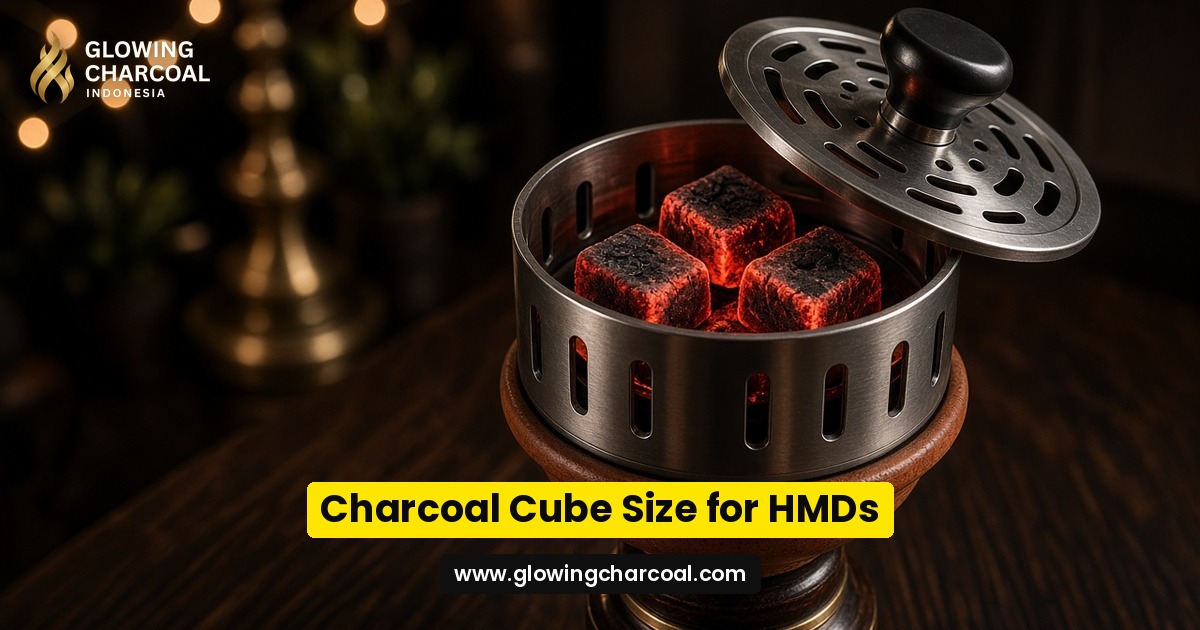
The best charcoal for a heat management device is a dense, low-ash natural coconut shell cube that fits the device’s chamber with room left for airflow, which for most lounge setups means a 25 mm or 26 mm cube, used in one consistent size across every device in the lounge. Glowing Charcoal Indonesia (PT Bara Coco Agronesia), a coconut shell charcoal factory in Central Java established in 2016, presses 100% coconut shell shisha cubes from 22 mm to 28 mm. Our Diamond grade runs at 1.6–2% ash, moisture under 6% and a calorific value of about 8,000 kcal/kg. Before you order a container, test the exact cube size in your own devices and write that size into your specification.
This guide is for hookah lounge owners, lounge groups and the distributors who supply them. It explains why cube size matters more under a heat management device (HMD) than on foil, how to check fit before you buy, how to standardise one size across your device fleet and how to brief the factory so every container matches the sample you approved. It is practical guidance from the factory side; your own devices and session style always have the final say.
What Is a Heat Management Device and Why Does Cube Size Matter?
A heat management device is a metal cap that sits on the bowl and holds the charcoal above the tobacco instead of directly on it, usually with a lid or vents to adjust the heat. HMDs are now the normal setup in lounges: a TNT Magazine feature (9 November 2026) notes that most places now use one because it evens out the heat and is the main reason a lounge session lasts much longer than a home session. If you want the background on foil versus devices, see our earlier article on aluminium foil vs heat management systems.
On foil, a staff member can move a cube anywhere on the bowl. Inside an HMD the cubes sit in a fixed chamber under a lid, so three things suddenly depend on cube size:
- Fit: a cube that is too tall can touch the lid or stop it closing, while a cube that is too small leaves gaps and uneven heat.
- Airflow: charcoal needs air to keep burning, and an over-filled chamber restricts it.
- Heat curve: the cap holds heat in, so a bigger or denser cube changes the session more than it would on an open bowl.
Which Cube Size Works Best with a Heat Management Device?
There is no single size that suits every device, because chamber depth and lid clearance vary from one model to the next. Hookah retailer guides published in 2026 generally describe 25 mm as the standard size that most bowls and devices are built around, and 26 mm as a popular lounge format for devices with a deeper chamber. One heat-management bowl maker’s published user guide, for example, suggests two 25 mm cubes for a softer session and two 27 mm cubes for a more intense one. Always follow your own device maker’s instructions first.
The table below shows our standard shisha cube sizes with the piece counts from our coconut charcoal briquette shapes and sizes page, and how lounges typically use each size with an HMD.
| Cube size | Approx. pieces per kg | Typical role with an HMD | What to check |
|---|---|---|---|
| 22 × 22 × 22 mm | 96 | Small bowls, lighter heat, or topping up a session | Can leave gaps in a wide chamber, so heat may be uneven |
| 25 × 25 × 25 mm | 72 | The all-round size for most devices and bowl types | Usually fits with space for airflow; a safe starting point for a mixed fleet |
| 26 × 26 × 26 mm | 64 | Popular lounge format for deeper chambers and longer sessions | Confirm the lid still closes fully once the cubes are lit |
| 27 × 27 × 27 mm | 54 | More heat from fewer cubes, for large bowls and dense blends | Lid clearance and airflow in shallow or narrow chambers |
| 28 × 28 × 28 mm | 50 | Specialist use where the device is designed for big cubes | Too tall for many caps; test before ordering |
Piece counts are approximate and depend on the grade and pressing density. If you are comparing samples from different factories, weigh ten cubes of each and compare piece counts per kilogram, not only the size printed on the box. Flats, hexagons and long fingers are made for other setups; some retailer guides advise against hexagons inside HMDs, so most lounges using devices stay with cubes. Our older article on how hookah charcoal size affects the smoking experience covers the general idea from the smoker’s side.
How Do You Check Whether a Cube Size Fits Your Device?
The only reliable test is in your own devices, with your own bowls, tobacco and staff. Run this check with free samples before you commit to a container:
- List every device model in use. Note how many of each you have across all your venues, because the size you choose must work for the whole fleet.
- Read each maker’s instructions. Write down the cube size and number of cubes the maker recommends, if any.
- Request two or three sizes as samples. For example, 25 mm and 26 mm, or 26 mm and 27 mm if you run deep chambers.
- Light the cubes fully. Heat them on your normal lounge burner until every face is covered in grey ash, then place them in the device. Retailer guides note that cubes shrink slightly while they light, so judge fit with lit cubes, not cold ones.
- Close the lid and check the gaps. The lid should close without pressing on the cubes, and there should still be space around them for air.
- Run a full session. Time how long the heat stays steady, when the first cube change is needed and how much ash builds up under the lid.
- Repeat on the second shift. Ask a different staff member to run the same test, so you know the size works in everyday service, not only for your most experienced coal runner.
Our step-by-step guide on how to test shisha charcoal samples explains ignition time, burn time, ash and the drop test in more detail.
Why Do Consistent Size and Density Matter Under a Cap?
Under an HMD lid, small differences between cubes add up. If one batch is slightly taller, it may touch the lid. If one batch is less dense, it burns down faster and staff have to change coals earlier in the session. That is why lounges that use devices care about consistency even more than lounges that still use foil. We wrote about this in why consistent charcoal cube shape matters.
These are the specifications we hold for our shisha grades, and why each one matters inside a device:
| Specification | Our figure | Why it matters with an HMD |
|---|---|---|
| Raw material | 100% coconut shell (shisha grades) | No hardwood blend, so burn behaviour stays steady from cube to cube |
| Ash content | Diamond grade 1.6–2%; Sucofindo COA: 2.00% | Less ash building up around the cubes and under the lid during a session |
| Moisture | Under 6%; Sucofindo COA: 4.46% total moisture | Dry cubes light evenly and are less likely to crack when heated |
| Fixed carbon | Sucofindo COA: 84.11% (as received) | A high carbon share supports a long, steady burn |
| Volatile matter | Sucofindo COA: 9.43% | Shows how much of the cube burns off as gas rather than as steady glowing carbon |
| Calorific value | About 8,000 kcal/kg | Enough heat to run a session from a small number of cubes |
| Hardness | Drop test: minimum 5 drops from 1 metre | Cubes arrive whole, so they still fit the chamber as intended |
The laboratory figures come from Sucofindo Certificate of Analysis No. E01021/COBHAT, dated 2 March 2026, which covers our Diamond and Premium shisha grades. You can read more about how we use third-party lab results in premium shisha charcoal backed by verified laboratory results. If you have seen cubes split in the burner, our article on why some coconut charcoal briquettes crack when heated explains the usual causes.
Should a Lounge Standardise on One Cube Size?
For most lounges and lounge groups, yes. One cube size across the whole device fleet makes training simpler, keeps sessions consistent between venues and shifts, and lets you buy in full containers of a single product. A 20ft container holds one product type with a minimum order of 18 tons; if you genuinely need two sizes, a 40ft container can carry two types at 13 tons each.
| Your situation | Practical approach | Container plan |
|---|---|---|
| One device model in all venues | Choose the size that tested best and use it everywhere | 20ft, one size (minimum 18 tons) |
| Mixed fleet, most devices with standard chambers | Pick the size that fits every model with airflow to spare, often 25 mm | 20ft, one size |
| Two device families with clearly different chambers | Run two sizes and keep them on separate, labelled shelves | 40ft, two types at 13 tons each |
| Distributor supplying many lounges | Stock the size your customers’ devices fit most often, plus a second size only if demand is proven | 20ft per size, or a 40ft with two types |
Whichever plan you choose, label shelves and coal stations by cube size so staff never mix sizes in the same device.
What if we are switching to a new device model?
Test the new model with samples before the next container is ordered, not after it arrives. Changing the cube size is simple at the factory before production starts, but a container of the wrong size is hard to use up if it does not fit your new caps.
How Many Cubes Does a Lounge Use per Session?
This depends on the device, the bowl and how long your sessions run, so the best number comes from your own trial. As a general picture of good café practice, the TNT Magazine feature describes three coals going on at the start, then two, with the coals rotated during the session. Once you know your own cubes per session, the piece counts per kilogram help you turn it into a monthly order.
For example, if your trial shows three 26 mm cubes per session, one kilogram (about 64 pieces) covers roughly 21 sessions. At 25 mm (about 72 pieces per kg) and three cubes per session, one kilogram covers roughly 24 sessions. Use your own trial numbers rather than these examples, and allow extra for breakage in the back bar and cubes discarded at closing time.
How Do You Brief the Factory for an HMD Lounge Supply?
A clear brief prevents most problems with repeat orders. When you ask us for a quote, include:
- Cube size and shape: for example “26 × 26 × 26 mm cube”, matching the sample you approved in your devices.
- Grade: Diamond or Premium, based on the ash and burn you saw in testing.
- Packaging: 1 kg inner boxes for front-of-house use, or bulk 10 kg cartons for a central coal station, plus your own brand artwork if you want a house brand.
- Volume and container: one size per 20ft container (minimum 18 tons), or two types in a 40ft at 13 tons each.
- Destination: your port of discharge, so we can confirm FOB Semarang, Jakarta (Tanjung Priok) or Surabaya depending on vessel availability, or arrange shipment to your port.
- Reference sample: keep a sealed box of the approved sample, so every future container can be compared against it.
Production lead time is 28–35 days from receipt of the deposit and approval of any artwork. Payment is a 50% deposit with the balance 5 days before container loading by T/T, or an irrevocable L/C at sight. Our capacity is about 8–10 tons per day. Lounge groups planning regular containers can read our guide to buying shisha charcoal factory-direct for lounge groups.
What Documents Come with an HMD Lounge Order?
Every export container of our shisha charcoal is declared on the bill of lading as “Coconut shell charcoal briquettes” under HS code 4402.20.10. Coconut shell charcoal ships as dangerous goods under UN 1361, Class 4.2, so the cartons carry the UN marking and hazard label, and we provide the MSDS with the shipment. Our article on understanding UN 1361 explains what this means for your forwarder and warehouse.
Frequently Asked Questions
What size charcoal works best with a heat management device?
Most heat management devices work well with a 25 mm or 26 mm natural coconut shell cube, but the right size is the one that fits your device’s chamber with the lid fully closed and space left for airflow, so test samples in your own devices before ordering.
Can I use 27 mm or 28 mm cubes in a heat management device?
Larger 27 mm and 28 mm cubes suit some devices that are designed for big cubes and large bowls, but they can be too tall for shallow or narrow chambers, so check lid clearance with fully lit cubes before you standardise on them.
Why does cube consistency matter more with a heat management device than with foil?
Cube consistency matters more with a heat management device because the cubes sit in a fixed chamber under a lid, so a batch that is taller, less dense or higher in ash changes how the lid closes, how air flows and how long the heat lasts.
How many coconut charcoal cubes are in 1 kg?
Glowing Charcoal Indonesia’s standard shisha cubes give about 96 pieces per kg at 22 mm, 72 at 25 mm, 64 at 26 mm, 54 at 27 mm and 50 at 28 mm, with the exact count depending on grade and pressing density.
Should a lounge use one cube size for all its devices?
Using one cube size for all devices is usually best for a lounge because it simplifies staff training, keeps sessions consistent between shifts and venues, and lets you order full 20ft containers of a single product.
What are the specifications of Glowing Charcoal Indonesia’s Diamond shisha charcoal?
Glowing Charcoal Indonesia’s Diamond shisha charcoal is made from 100% coconut shell with 1.6–2% ash, moisture under 6% and a calorific value of about 8,000 kcal/kg, and Sucofindo Certificate of Analysis No. E01021/COBHAT (2 March 2026) recorded 4.46% total moisture, 2.00% ash, 9.43% volatile matter and 84.11% fixed carbon as received.
What is the minimum order and lead time for lounge-supply shisha charcoal?
The minimum order is 18 tons of one product type in a 20ft container, or two types at 13 tons each in a 40ft container, and production takes 28–35 days from receipt of the deposit and approval of any artwork.
Can I get free samples to test in my heat management devices?
Yes, Glowing Charcoal Indonesia sends shisha charcoal samples free of charge, and the buyer only pays the courier cost by bank transfer to our company account.
Request a Quote or Free Sample
Running heat management devices across one lounge or a whole group? Tell us which device models you use, the cube sizes you want to compare, your expected monthly volume and your destination port, and we will suggest sizes to test and prepare a quote. You can also see our full coconut charcoal briquettes for shisha range.
Samples are free; you only pay the courier cost by bank transfer to our company account. Email info@glowingcharcoal.com or WhatsApp +62 812-8400-6660 to request a quote or a free sample.