
Shipping Shisha Charcoal to the UAE in 2026: Jeddah and Khor Fakkan Routes Explained
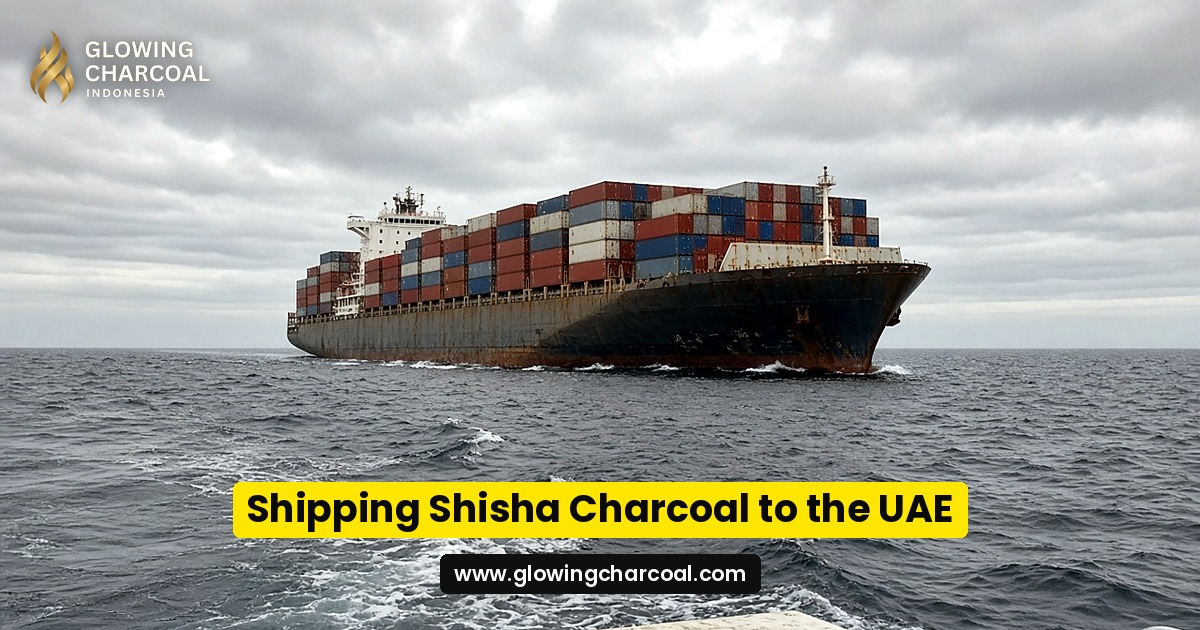
If you run a shisha brand, a lounge chain or a distribution business in Dubai, Sharjah or Abu Dhabi, 2026 has not been an easy year for imports. Since March, most mainline container services have stayed out of the Strait of Hormuz, and Jebel Ali is no longer a regular direct call on many Asia–Gulf loops. Coconut shisha charcoal adds one more layer, because it ships as dangerous goods under UN 1361, and carriers apply their tightest rules to DG cargo.
The good news is that shipping shisha charcoal to the UAE is still very possible. This guide explains the two routes we currently use from Indonesia to the UAE, what each one means for your timing and paperwork, and how to plan your next container so your lounges and customers don’t run short.
The Short Answer: Two Working Routes to the UAE
For UAE-bound containers from our factory, we currently work with two routing options:
- Via Jeddah, then by truck to Jebel Ali. The container sails from Indonesia to Jeddah on the Red Sea coast of Saudi Arabia and continues overland by inland trucking to Jebel Ali.
- Direct to Khor Fakkan with Maersk or Hapag-Lloyd. Khor Fakkan sits on the UAE’s east coast, outside the Strait of Hormuz, so ships can call there without entering the Gulf. From Khor Fakkan, cargo moves inland to its final destination.
Which route is better depends on the sailing schedule at the time of booking, space for DG cargo, port congestion and where your warehouse is. We confirm the route for each shipment with the carrier and forwarder before loading, and we plan on a total transit time of about 4–6 weeks to the UAE to stay on the safe side.
Why the Usual Jebel Ali Route Changed in 2026
Before 2026, most Asia–Gulf services called directly at Jebel Ali. After shipping through the Strait of Hormuz was disrupted in March 2026, carriers suspended or reshaped their Gulf services and moved volume to ports outside the strait, mainly Khor Fakkan and Fujairah on the UAE’s east coast, and Jeddah on the Red Sea, with land and feeder connections for the rest of the journey.
The situation is still moving. In October 2026, Maersk and Hapag-Lloyd restarted their joint Asia–Middle East loop (sold as FM1 by Maersk and AGX by Hapag-Lloyd) with Khor Fakkan as its only Middle East call, and the first sailing on the new rotation was due at Khor Fakkan in mid-November. At the same time, both carriers and large forwarders have warned that Khor Fakkan and Fujairah are under heavy pressure, with vessel congestion, high yard use and truck delays.
So the routes exist, but every booking needs to be checked against the carrier’s latest notice. That is something your supplier and forwarder should do for you, shipment by shipment.
Route 1: Indonesia to Jeddah, Then Inland Trucking to Jebel Ali
On this route, the container sails to Jeddah Islamic Port and continues by road across Saudi Arabia to Jebel Ali, where it is cleared for the UAE market.
When it makes sense
- When direct east-coast sailings are full, delayed or not accepting DG cargo that week.
- When your warehouse or customer is close to Jebel Ali or in Dubai, so the final delivery leg is short.
- When a forwarder you trust already runs regular bonded trucking between Jeddah and the UAE.
What to watch
- DG acceptance for onward movement. Not every carrier accepts UN 1361 cargo through Jeddah for onward delivery. Book only with a line and forwarder that confirm in writing that they will take it.
- Transit and border paperwork. The cargo crosses Saudi Arabia in transit, so your forwarder must handle the transit documents and the dangerous goods declaration for road transport.
- Port density. Jeddah has been busy too, so allow a buffer for yard and trucking time.
Route 2: Direct to Khor Fakkan with Maersk or Hapag-Lloyd
On this route, the container sails to Khor Fakkan, which lies outside the Strait of Hormuz, and moves inland from there.
How the inland leg works
Under Maersk’s Middle East operational update of 26 October 2026, DG cargo accepted for Khor Fakkan is moved via the Sajaa inland container depot. Consignees registered in Khor Fakkan or Sharjah can clear the cargo at Sajaa, and for consignees who need delivery to Jebel Ali or Abu Dhabi, Maersk can arrange a double-bonded movement. Hapag-Lloyd’s guidance says bonded transport between the east-coast ports and Jebel Ali or Sharjah takes about five days.
When it makes sense
- When you want a direct ocean service without a Red Sea transhipment.
- When your business is registered in Sharjah or the Northern Emirates and can clear at Sajaa.
- When the carrier confirms DG space on the sailing you need.
What to watch
- Capacity. DG bookings to Khor Fakkan are accepted subject to available capacity, so space can run out on busy weeks.
- Congestion. Berth waiting, yard use and trucking delays at Khor Fakkan can add days, so build them into your stock plan.
- Extra inland charges. Bonded moves and local clearance charges are billed on top of ocean freight, so ask your forwarder for a full door-to-door estimate.
Paperwork Every UAE Shisha Charcoal Shipment Needs
Whichever route you choose, the document set is largely the same. For a coconut shell shisha charcoal container (HS code 4402.20.10) from Indonesia, expect:
- Commercial invoice and packing list
- Bill of lading
- Certificate of origin
- MSDS (material safety data sheet)
- Dangerous goods declaration for UN 1361, Class 4.2
- Any further DG documents the carrier asks for at the time of booking, such as a container packing or vanning certificate
Carriers often ask for DG documents before they release the empty container or accept it at the gate, so these papers have to be ready early. We prepare our side as part of every export order. For a fuller list, read our guide on the documents needed when importing charcoal from Indonesia, and for the background on DG classification, see what UN 1361 means for a coconut charcoal factory.
Planning Your Timeline: Order Earlier Than You Used To
With longer and less predictable routes, the safest approach is to work backwards from the date you need the stock on your shelves.
| Step | Typical time |
|---|---|
| Production from deposit | 28–35 days |
| Balance payment | 5 days before container loading |
| Sea and inland transit to the UAE (planning figure) | 4–6 weeks |
| Local clearance and delivery | Allow extra days for port and trucking congestion |
In practice, that means placing your order roughly two and a half to three months before the stock must be in your warehouse. If you are planning for a peak season, such as Ramadan 2027, our Ramadan 2027 stock-planning guide shows how to work the dates out step by step.
How We Help UAE Buyers Ship Smoothly
- 100% coconut shell shisha charcoal. Our Diamond grade has ash of 1.6–2%, moisture under 6% and a calorific value of about 8,000 kcal/kg.
- Steady supply. Production capacity is about 8–10 tons per day, and our MOQ is 18 tons per 20ft container.
- Flexible loading port. We ship FOB Semarang, Jakarta (Tanjung Priok) or Surabaya, depending on vessel availability, which helps when space on one service is tight.
- Clear payment terms. 50% deposit, with the balance by T/T 5 days before loading, or an irrevocable L/C at sight.
- Experience in the region. We have exported to the UAE, Qatar, Bahrain, Jordan, Iraq and Lebanon, among other markets.
Because we sell FOB, you or your forwarder book the main sea freight. We coordinate closely with your forwarder on the routing, DG documents and loading date so the container makes the vessel you’ve booked.
Frequently Asked Questions
Can shisha charcoal still be shipped to Dubai in 2026?
Yes. We currently ship UAE-bound containers either via Jeddah with inland trucking to Jebel Ali, or direct to Khor Fakkan with Maersk or Hapag-Lloyd. Each booking is checked against the carrier’s latest acceptance rules for DG cargo.
How long does shipping from Indonesia to the UAE take?
For planning, allow about 4–6 weeks of transit on top of the 28–35 day production time. Actual timing depends on the sailing, the route and congestion at the destination ports.
Why is shisha charcoal treated as dangerous goods?
Charcoal is classified under UN 1361 (Class 4.2, substances liable to spontaneous combustion), so carriers handle it as dangerous goods and need the right declarations before they accept the container.
Is Khor Fakkan or Jeddah the better route?
Neither is always better. Khor Fakkan gives a direct ocean call but can be congested and is subject to DG capacity. Jeddah with inland trucking can work when east-coast space is tight. We decide together with you and your forwarder for each shipment.
Do you ship CIF to the UAE?
We quote FOB by default, so you keep control of the freight booking. Read our guide to FOB and CIF for charcoal imports to see how each term works.
Can I get a sample before ordering a container?
Yes. Samples are free; you only pay the courier fee by bank transfer to our company account.
Request a Quote or Free Sample
Planning your next container to Dubai, Sharjah or Abu Dhabi? Tell us your destination, preferred grade and target arrival date, and we’ll help you plan production and routing with your forwarder. Email info@glowingcharcoal.com or message us on WhatsApp at +62 812-8400-6660 to request a quote or a free sample.