
Why Premium Hookah Charcoal Should NOT Break During Ignition
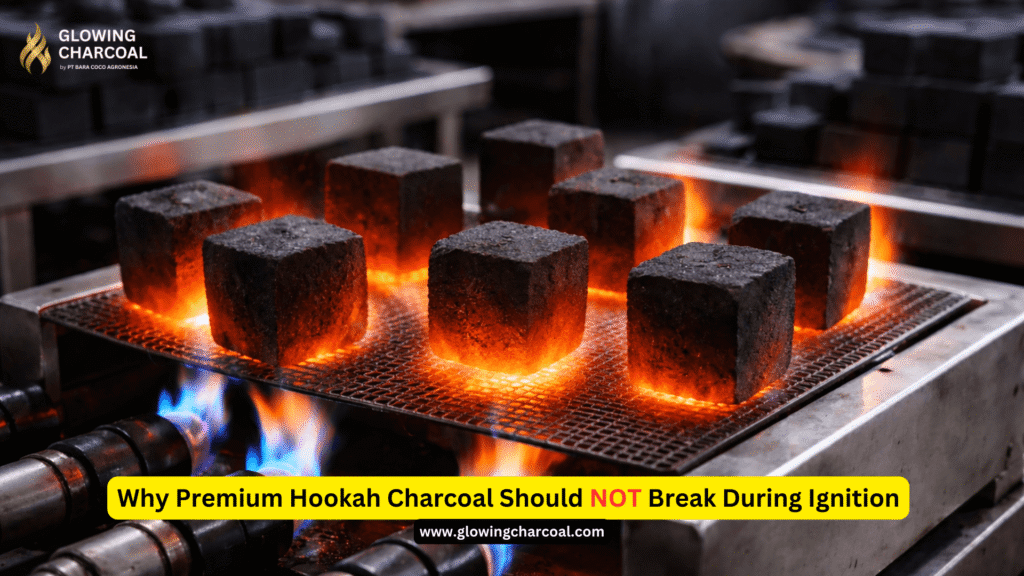
For hookah lounges, distributors, and charcoal importers, the quality of charcoal is one of the most important factors that determines the overall smoking experience. One of the most common problems with low-quality charcoal is breaking or cracking during ignition. Premium coconut charcoal briquettes should remain strong and stable when exposed to high heat, especially during the ignition stage.
When charcoal breaks while being lit, it can create several operational and quality issues. Understanding why this happens—and why premium charcoal avoids this problem—can help buyers choose a more reliable product and supplier.
The Ignition Process and Heat Stress
During ignition, charcoal briquettes are exposed to very high temperatures in a short period of time. Most hookah lounges today use high-pressure gas burners or powerful electric charcoal starters to ignite the briquettes quickly.
This rapid heating creates thermal stress inside the charcoal. If the briquettes are not properly manufactured, the internal structure can expand unevenly, causing cracks or complete breakage.
High-quality coconut charcoal briquettes are designed and produced to withstand this sudden temperature change, maintaining their shape and strength during ignition.
Problems Caused by Charcoal Breaking During Ignition
When charcoal breaks during ignition, several problems can occur that directly affect both the user experience and business operations.
Uneven Heat Distribution
Broken charcoal pieces burn inconsistently. This creates uneven heat on the hookah bowl, which negatively impacts the flavor and performance of the shisha session.
Shorter Burning Time
Smaller broken pieces burn much faster than full briquettes. This forces hookah lounges to replace charcoal more frequently, increasing operational costs and reducing efficiency.
More Ash and Residue
When charcoal breaks apart, it produces more fragments and ash. This creates unnecessary mess around the burner and the hookah tray.
Safety Concerns
Broken pieces can fall from burners or bowls, which may create safety risks in busy hookah lounges.
Why Low-Quality Charcoal Breaks
Several manufacturing factors can cause charcoal briquettes to break during ignition.
Poor Raw Material Selection
The strength of coconut charcoal starts with the quality of the coconut shell used during carbonization. Weak or mixed raw materials produce charcoal with fragile internal structures.
Incorrect Moisture Levels
Charcoal with excess moisture may crack during ignition due to rapid internal steam pressure when exposed to high heat.
Weak Compression During Production
During briquette production, charcoal powder must be compressed under high pressure. If compression is insufficient, the resulting briquettes become porous and fragile.
Improper Carbonization
If coconut shells are not carbonized correctly, the charcoal structure becomes unstable and more prone to breaking when heated.
What Makes Premium Coconut Charcoal Strong
High-quality coconut charcoal briquettes are engineered to withstand the ignition process without breaking.
Premium briquettes usually have:
Strong and dense structure
Low and controlled moisture content
Properly carbonized coconut shell material
High compression during briquette formation
Uniform shape and consistent density
These characteristics allow the charcoal to remain stable even when exposed to intense ignition temperatures.
The Importance of Manufacturing Experience
Producing strong and durable coconut charcoal requires experience, strict quality control, and consistent production standards.
Established charcoal manufacturers in Indonesia understand that the performance of the briquette during ignition is critical for professional hookah lounges. For this reason, experienced factories carefully control every stage of production—from raw material selection to final drying and packaging.
Factories with years of experience in the charcoal industry also invest in quality testing and production optimizationto ensure that each batch meets international export standards.
Why Importers Prefer Reliable Indonesian Charcoal Factories
Many international distributors and hookah lounges prefer to work with experienced Indonesian manufacturers because Indonesia has become the global center for premium coconut charcoal production.
Professional charcoal factories focus on maintaining:
Consistent briquette density
Low moisture levels
Stable combustion performance
Strong resistance to cracking during ignition
Reliable suppliers understand that long-term partnerships depend on consistent quality, transparent production processes, and dependable export capabilities.
A Commitment to Quality and Performance
At Glowing Charcoal Indonesia, quality and durability are key priorities in the production of coconut charcoal briquettes. Through careful raw material selection, optimized compression techniques, and strict production control, the briquettes are designed to maintain their strength even under high ignition temperatures.
With years of experience supplying international markets, the focus remains on producing charcoal that delivers stable heat, long burning time, and reliable performance for professional hookah use.
Conclusion
Breaking during ignition is often a clear sign of low-quality charcoal. Premium coconut charcoal briquettes should remain strong, stable, and intact even when exposed to high temperatures.
For distributors, importers, and hookah lounges, choosing charcoal produced by experienced manufacturers ensures better performance, longer burning sessions, and greater reliability.
Working with a trusted factory that understands the importance of durability, consistency, and strict quality control can make a significant difference in both product performance and customer satisfaction.